


























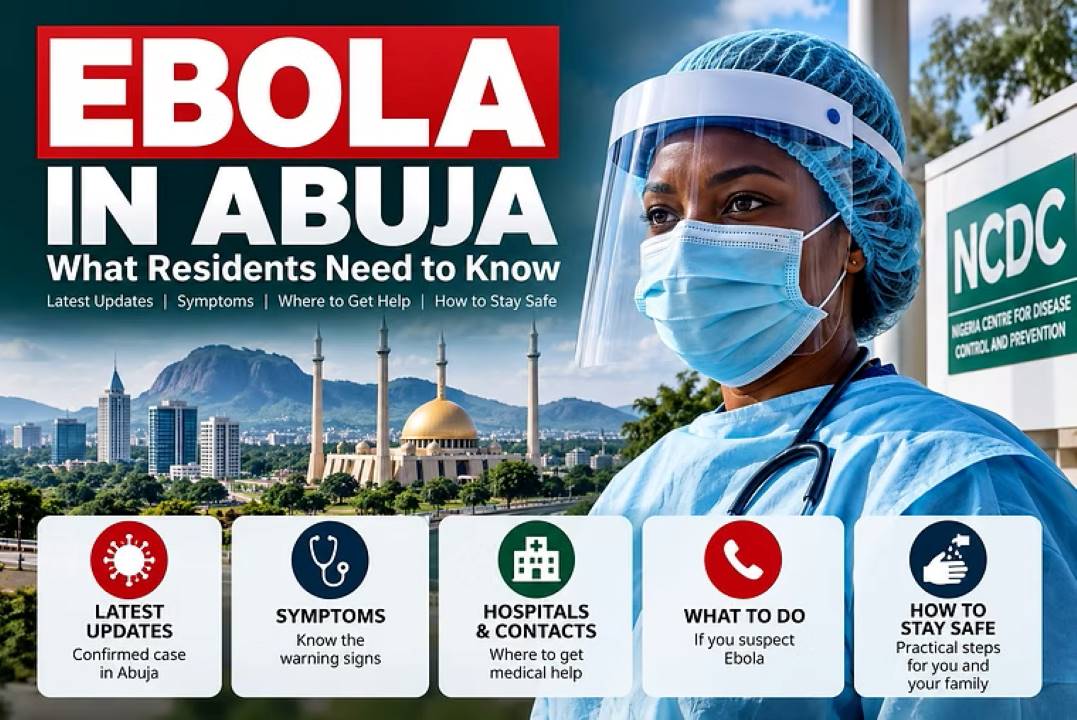
Nigeria has confirmed its first Ebola case in more than a decade, raising concerns about the spread of the deadly virus across West Africa. The case was reported in Abuja on Tuesday, October 20, 2026, according to the information provided, making Nigeria the fourth African country affected by the outbreak that began in the Democratic Republic of Congo (DRC) in May.
According to DebrichGroup.com reporter, the development has intensified concerns among health authorities because Nigeria is Africa’s most populous country, with extensive domestic and international travel connections. Officials are working to identify people who may have been exposed to the virus and prevent further transmission.
According to the report, the patient travelled from Uganda to Nigeria after visiting the Democratic Republic of Congo. The patient tested positive for Ebola 14 days after arriving in Nigeria, while health authorities identified 44 contacts requiring follow-up.
The case marks Nigeria’s first reported Ebola infection since the devastating West African epidemic of 2014, which killed thousands of people across the region.
Nigeria Confirms Ebola Case in Abuja
Nigeria’s confirmation of an Ebola case has raised the urgency of public health surveillance, contact tracing and emergency preparedness across the country.
The reported patient had travelled internationally before testing positive, prompting health authorities to investigate the patient’s movements and identify individuals who may have come into contact with the infection.
The identification of 44 contacts is an important part of the response. Contact tracing enables health officials to monitor potentially exposed individuals, identify symptoms early and arrange testing or isolation when necessary.
However, identifying contacts does not mean that all 44 people are infected. They are individuals who may have been exposed and whose health status must be assessed.
The period between the patient’s arrival and the positive test has also raised questions about possible exposure during travel and after arrival. Health authorities will need to establish whether anyone else became infected and determine the extent of any potential transmission.
Given Nigeria’s population and busy transport networks, a rapid, coordinated response will be essential to contain the case and prevent further spread.
How the Ebola Case Reached Nigeria
According to the information reported by Reuters, the patient travelled to Nigeria from Uganda after previously visiting the Democratic Republic of Congo, where the current Ebola outbreak was first identified.
The patient tested positive 14 days after arriving in Nigeria, creating a need for a detailed investigation of the travel history and potential exposure locations.
International travel can complicate Ebola outbreak investigations because infected people may cross borders before developing recognisable symptoms or receiving a diagnosis.
The investigation is expected to focus on identifying people who had close contact with the patient, assessing possible exposure during the journey and determining whether any additional suspected cases require testing.
The reported route through Uganda and the Democratic Republic of Congo also highlights the importance of information-sharing between national health authorities and international public health agencies.
Effective cross-border coordination can help officials identify exposed travellers, communicate risks and implement appropriate monitoring measures without creating unnecessary public panic.
Ebola Outbreak in Africa: What Is Happening?
The outbreak, first reported in the Democratic Republic of Congo in May 2026, has become a major public health concern. According to the supplied report, it has killed 4,646 people and has been described by health officials as the fastest-spreading Ebola outbreak on record.
The report also characterises the outbreak as the second-largest on record.
The outbreak has now reportedly affected four African countries, with Nigeria becoming the latest country to confirm a case.
The scale and speed of the outbreak have raised concerns about the ability of health systems to detect infections quickly, trace contacts and respond to cases across national borders.
Ebola outbreaks can be particularly challenging because early symptoms may resemble those of other illnesses, including malaria and other common infections. Without timely recognition and appropriate infection-control measures, transmission can occur in healthcare facilities, households and other settings where people come into direct contact with an infected person’s bodily fluids.
The exact situation in each affected country depends on the number of confirmed cases, the speed of contact tracing, the availability of protective equipment and the effectiveness of public health interventions.
Important: The reported death toll, outbreak ranking and number of affected countries should be interpreted in the context of the specific outbreak and the reporting date. These figures require confirmation from current official health updates.
What Is Ebola Virus Disease?
Ebola virus disease is a severe and potentially fatal illness caused by viruses in the Orthoebolavirus genus. It can cause serious illness, internal and external bleeding in some cases, organ dysfunction and death.
The disease was first recognised in 1976 during outbreaks in Central Africa. Since then, several outbreaks have occurred, including the major West African epidemic of 2014–2016.
Ebola is not spread through the air in the same way as influenza or measles. Transmission generally occurs through direct contact with the blood or other bodily fluids of a person who is sick with or has died from Ebola, or through contact with contaminated objects and materials.
People do not normally transmit Ebola before symptoms begin. However, once symptoms develop, close contact with an infected person can create a significant risk of transmission.
The virus can also spread through contact with infected animals and through exposure to contaminated materials during unsafe caregiving, healthcare procedures or funeral practices.
What Are the Symptoms of Ebola?
Ebola symptoms can develop between two and 21 days after exposure, with symptoms commonly appearing within eight to ten days.
Early symptoms may include:
- Fever
- Severe headache
- Muscle pain and weakness
- Fatigue
- Sore throat
- Loss of appetite
As the illness progresses, some patients may develop:
- Vomiting and diarrhoea
- Abdominal pain
- Skin rash
- Unexplained bruising or bleeding in some cases
- Organ dysfunction and other severe complications
Not every patient experiences bleeding. Fever and other early symptoms are not unique to Ebola, so symptoms alone cannot establish a diagnosis.
Anyone who believes they may have been exposed to Ebola and develops compatible symptoms should seek urgent guidance from public health authorities or a healthcare provider before travelling to a clinic unannounced. This helps medical teams arrange safe assessment and reduce the risk of exposing others.
Why Is the Ebola Outbreak So Dangerous?
Ebola is dangerous because it can cause severe disease, spread through direct contact with infectious bodily fluids and place considerable pressure on healthcare systems.
The case fatality rate varies according to the Ebola virus species, the outbreak, the quality and timeliness of care and other factors. Some Ebola outbreaks have had fatality rates approaching or exceeding 50%.
The supplied report states that the virus species responsible for the current outbreak kills approximately half of those infected.
The absence of an approved vaccine or treatment specifically for the virus species causing this outbreak, as described in the report, adds to the challenge. Nevertheless, supportive medical care remains important, and early treatment of dehydration and other complications can improve a patient’s chances of survival.
The response must also address misinformation. False claims about how Ebola spreads, ineffective home remedies and misleading reports about suspected cases can undermine public trust and delay medical care.
Clear, consistent communication from trusted health authorities is therefore essential.
Nigeria’s Ebola History: The 2014 Outbreak
Nigeria last experienced an Ebola outbreak during the West African epidemic of 2014.
The virus entered Nigeria after an infected traveller from Liberia arrived in Lagos in July 2014. The introduction of Ebola into one of Africa’s largest cities raised fears that the disease could spread rapidly through a densely populated urban environment.
Nigerian health authorities, working with healthcare professionals and international partners, implemented contact tracing, patient isolation, infection-control measures and public education campaigns.
Nigeria ultimately contained the outbreak, recording 20 confirmed and probable cases and eight deaths, according to widely reported historical figures.
The response was recognised for its intensive contact tracing and coordination between public health officials. It demonstrated that even in a densely populated country with extensive travel connections, rapid identification of cases and effective public health action can prevent a larger epidemic.
The latest reported case is a reminder that previous success does not eliminate the possibility of new infections. Continued surveillance, well-prepared healthcare facilities and public awareness remain critical.
What Is Nigeria Doing to Prevent Further Spread?
Following confirmation of the reported case, the immediate public health priorities include identifying contacts, monitoring potentially exposed individuals and determining whether additional infections have occurred.
Key measures in an effective Ebola response include:
1. Contact tracing
Health officials identify people who may have had close contact with the infected patient and assess their exposure risk. Contacts may be monitored for symptoms throughout the relevant incubation period.
2. Isolation and medical assessment
People suspected of having Ebola should be assessed through appropriate public health procedures. Confirmed patients require specialised care and strict infection-control precautions.
3. Laboratory testing
Laboratory testing is essential to confirm suspected infections and distinguish Ebola from other illnesses that may have similar symptoms.
4. Infection prevention in healthcare facilities
Healthcare workers need appropriate protective equipment, training and safe procedures for handling patients, specimens and contaminated materials.
5. Public education
Authorities should provide clear information about transmission, symptoms, when to seek help and how to report potential exposure.
6. Cross-border cooperation
Nigeria and other affected countries need to share relevant information about cases, travel histories and potential exposures to support coordinated surveillance.
The effectiveness of these measures will depend on how quickly they are implemented and whether additional cases are detected.
Should Nigerians Be Worried About Ebola?
The confirmation of a case deserves serious attention, but it does not automatically mean that Nigeria is facing a nationwide Ebola epidemic.
The immediate level of risk depends on factors including the patient’s condition, the nature of contacts, the speed of case detection and whether further transmission has occurred.
Members of the public should follow official guidance from the Nigeria Centre for Disease Control and Prevention (NCDC) and the relevant health authorities.
People should avoid direct contact with the blood and bodily fluids of anyone suspected of having Ebola. They should also avoid handling the bodies of people who may have died from the disease unless trained personnel have put appropriate safety measures in place.
Anyone who believes they have had a relevant exposure should contact health authorities promptly and follow instructions on monitoring and medical assessment.
It is equally important not to stigmatise people because they have travelled from an affected country. Travel history can help health officials assess risk, but it does not establish that a person is infected.
How Can Nigerians Protect Themselves?
The public can support Ebola prevention by following practical precautions and relying on credible information.
- Wash hands regularly with soap and water or use an appropriate alcohol-based hand sanitiser.
- Avoid direct contact with the blood and bodily fluids of anyone suspected or confirmed to have Ebola.
- Do not handle potentially contaminated needles, medical waste or other materials.
- Avoid contact with the bodies of people who may have died from Ebola unless appropriate trained personnel are managing the situation.
- Seek official guidance promptly if exposed to a suspected case.
- Follow public health instructions regarding testing, monitoring and isolation.
- Do not share unverified social media messages, sensational claims or unproven treatments.
- Follow updates from the NCDC, the World Health Organization (WHO) and relevant state health authorities.
Hand hygiene is useful, but it is not a substitute for avoiding exposure to infectious bodily fluids and following official infection-control guidance.
The Role of Uganda and the Democratic Republic of Congo
The reported travel history involving Uganda and the Democratic Republic of Congo demonstrates why Ebola surveillance must extend beyond the country where an outbreak begins.
The Democratic Republic of Congo was the reported starting point of the outbreak in May 2026. Uganda’s role in the patient’s travel route adds another dimension to the investigation and makes cooperation between national authorities especially important.
Health authorities may need to review travel records, identify possible contacts and coordinate the exchange of information about the patient’s movements.
Such cooperation is not limited to airports. It can also involve hospitals, laboratories, emergency response teams and local public health agencies.
The goal is to identify potential infections as early as possible while providing accurate information to travellers and communities.
Can Ebola Be Treated or Prevented With a Vaccine?
Treatment and prevention options depend on the species of Ebola virus responsible for an outbreak.
Some Ebola vaccines and specific treatments have been developed for the Zaire ebolavirus species. However, they cannot automatically be assumed to protect against other Ebola virus species.
The supplied report states that the species responsible for the current outbreak has no approved treatment or vaccine. That statement should be checked against current WHO and national health authority guidance before being treated as definitive.
Even when a specific vaccine or medicine is unavailable, supportive care can help manage dehydration, electrolyte imbalances, oxygen needs and other complications.
Early diagnosis, isolation, appropriate clinical care, contact tracing and infection prevention remain central to controlling outbreaks.
Economic and Regional Implications of the Ebola Outbreak
The spread of Ebola into Nigeria could have implications beyond public health.
Nigeria is a major regional centre for business, aviation, trade and international travel. A confirmed case can prompt additional screening, public health precautions and changes in travel behaviour.
If further cases emerge, businesses, healthcare facilities, transport operators and local communities may face additional pressure.
Public concern can also affect tourism, cross-border commerce and confidence in the ability of authorities to manage the outbreak.
However, the impact will depend on the scale of transmission and the effectiveness of the response. A single confirmed case does not by itself justify assuming that borders will close, flights will be suspended or widespread restrictions will be imposed.
Accurate reporting and proportionate public health measures are essential to avoid unnecessary economic disruption while protecting communities.
What Happens Next?
The next phase of the response will focus on determining whether the reported case has led to further transmission.
The identification and monitoring of 44 contacts will be important, alongside laboratory confirmation, investigation of the patient’s travel history and assessment of potential exposure locations.
Health authorities will also need to communicate verified information to the public and update their response as new evidence becomes available.
If no additional infections are detected and all exposed contacts complete the required monitoring period without developing the disease, the risk associated with this particular transmission chain may decline. If additional cases are identified, further contact tracing and containment measures will be necessary.
The situation remains dependent on verified updates from Nigeria’s health authorities and international public health organisations.
Nigeria’s reported first Ebola case in more than a decade is a significant public health development, particularly as the wider outbreak continues to raise concern across Africa.
The reported patient’s journey from the Democratic Republic of Congo through Uganda to Nigeria, followed by a positive test 14 days after arrival, highlights the importance of cross-border surveillance and rapid contact tracing.
With 44 contacts reportedly identified, the immediate priority is to determine whether further transmission has occurred and ensure that anyone at risk receives appropriate monitoring and medical guidance.
Nigeria’s successful response to the 2014 Ebola outbreak provides an important historical example of how coordinated public health action can contain the disease. However, continued vigilance, transparent communication and cooperation between affected countries will be essential.
The public should remain informed, avoid misinformation and follow official guidance from the NCDC and WHO as the situation develops.
For the latest verified information, follow announcements from the Nigeria Centre for Disease Control and Prevention and the World Health Organization.