


























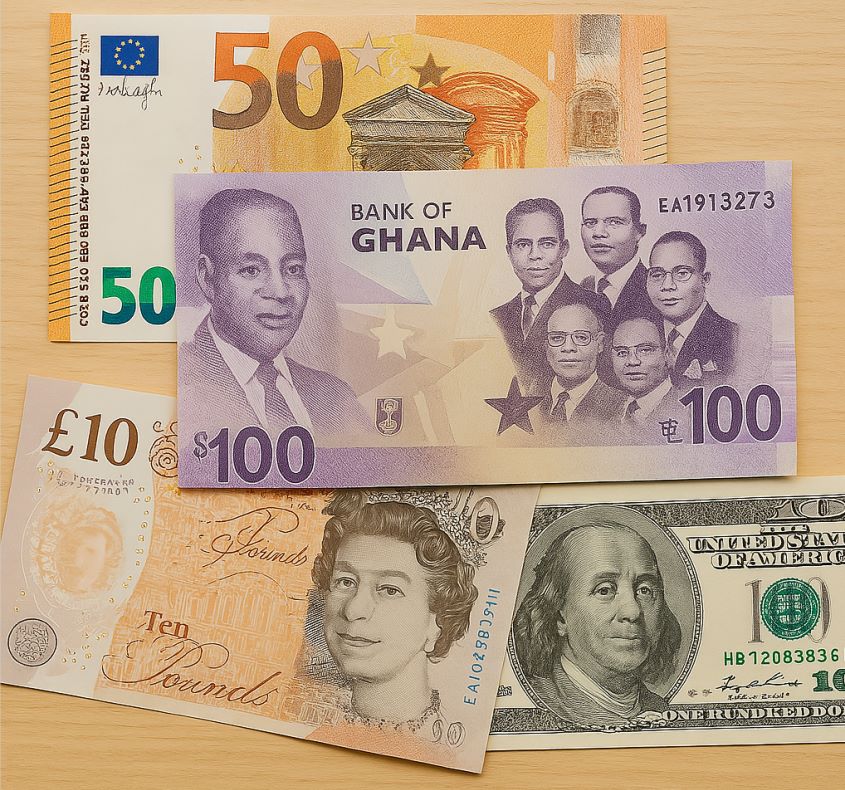
Ghana cedi is trading at GHS 11.40 to 1 USD on the interbank market. This marks a continuation of the mild depreciation that began in late November, when the currency slipped to around GHS 11.19 per dollar on November 27, 2025.
According to DebrichGroup.com analyst, while the movement is still modest, it signals ongoing pressure on the currency as the year draws to a close. With Ghana now in December 2025, many are asking what is driving this shift and what the country should expect in the weeks ahead.
The Current Situation
The cedi’s weakening trend from late November has slightly intensified into early December. The currency has edged from GHS 11.1–11.2 to around GHS 11.4 per dollar, reflecting:
-
Higher year-end demand for foreign currency
-
Continued market reaction to recent monetary policy decisions
-
Normal seasonal pressures that typically affect the cedi during the last quarter of the year
Despite this, the broader economic environment remains more stable compared to the crisis years. Inflation has fallen significantly, external reserves have improved, and the financial system is more resilient. However, the cedi remains sensitive to investor sentiment, policy signals, and trade-related FX demand.
Why the Cedi Is Under Pressure (December 2025 Update)
1. Impact of Recent Interest Rate Cuts
In November, the Bank of Ghana made significant policy rate cuts to encourage borrowing and support economic activity. Although well-intentioned, these cuts reduced the return on cedi-denominated assets. As a result, some investors have shifted to the US dollar, placing downward pressure on the cedi. The effect is still being felt through early December.
2. Strong Year-End Dollar Demand
December is one of the highest FX-demand months. Companies are:
-
Paying for last-minute imports
-
Settling foreign obligations
-
Repatriating profits
-
Closing their annual accounts
This seasonal rush for dollars is one of the biggest drivers behind the December depreciation.
3. Portfolio Rebalancing After Earlier Cedi Strength
Because the cedi performed strongly earlier in 2025, some businesses and investors are taking profits and increasing their dollar positions before the year ends. This adds to FX market pressure.
4. Adjustment to the New FX Framework
The Bank of Ghana’s updated FX operations framework emphasizes letting the market play a larger role in determining the exchange rate. While this is positive in the long term, traders are still adjusting, which contributes to short-term volatility.
5. Timing of Export Receipts
Ghana’s major export inflows — gold, cocoa, and oil — do not always arrive evenly throughout the year. Any delays or seasonal dips reduce the supply of dollars in the system, magnifying the impact of demand.
Is This Depreciation Serious?
The move from around GHS 11.2 to GHS 11.4 is not alarming. It is within normal seasonal and policy-driven ranges and is nowhere near crisis-level depreciation. Ghana’s economic fundamentals remain stronger today than in previous high-volatility periods.
However, it is a reminder that the cedi is still exposed to shifts in expectations and policy decisions.
What to Expect Through December and Early 2026
1. Continued Short-Term Fluctuation
The cedi will likely fluctuate within the GHS 11.2–11.5 range throughout December due to holiday-related FX demand.
2. Stabilization After the Holiday Season
In mid-January:
-
Corporate FX demand usually falls
-
Export inflows pick up
-
The government presents clearer financing plans
-
Investor sentiment becomes more stable
This could ease pressure on the cedi.
3. Gradual Improvement If Policies Remain Consistent
A steady fiscal path, controlled spending, and gradual monetary easing will help stabilize or even strengthen the cedi early in 2026.
What Ghana Should Do Next
1. Moderate the Pace of Monetary Easing
Future rate cuts should be gradual and data-driven to avoid signaling monetary looseness, which can weaken the currency.
2. Sustain Fiscal Discipline
Predictable and transparent fiscal behavior is crucial for maintaining investor confidence heading into 2026.
3. Boost FX Market Transparency
Clear communication about interventions and FX market activity helps reduce speculation and unnecessary panic.
4. Strengthen Export Performance
Improving productivity in cocoa, gold, oil, and non-traditional exports remains essential for increasing FX supply.
5. Expand Hedging Tools
Businesses need accessible forward contracts and other FX risk-management solutions to reduce reliance on the spot market.
What Businesses and Households Can Do
Businesses
-
Hedge FX needs for the first quarter of 2026
-
Diversify working capital if you have essential dollar obligations
-
Use contracts that share FX risk with suppliers or buyers
Households
-
Avoid panic FX purchases — December spikes usually ease after the holidays
-
Diversify savings only if you have genuine FX-linked expenses
-
Monitor inflation and adjust spending gradually
The cedi’s depreciation to around GHS 11.4 per USD as of December 4, 2025 is not a crisis, but a reflection of seasonal dollar demand, recent policy changes, and normal market adjustments. With strong reserves, improving inflation, and better policy frameworks, Ghana is well positioned to maintain stability.
Going forward, consistent monetary policy, disciplined government spending, and improved FX market transparency will be key to protecting the cedi as the country moves into 2026.